Swimming with Dolphins in Madeira: Rules and What to Book
Updated
Swimming with dolphins in Madeira means a restricted, boat-supported wildlife activity. Choose it only if you’re comfortable with the possibility of staying aboard. If getting into the water is the only outcome you’d enjoy, a trip involving wild animals is a poor match for your expectations.
The useful distinction is between an in-water observation programme, a dolphin-watching trip and a cruise with an ordinary swimming stop. They can sound similar in a booking title. Before paying, establish which one you’re buying and what happens if the water activity cannot go ahead.
What a regulated dolphin swim actually means
Madeira’s regional regulation draws a narrow exception for underwater observation alongside a general ban on deliberately entering the water to interact with marine mammals. Article 6 allows up to four observers, holding the platform and supported by a line attached to it. This is not permission to swim off after dolphins. The regional regulation, Article 6, is the source for these limits.
For your booking, ask the operator how its programme follows that framework and whether it is authorised for the activity offered. A tourism registration number alone doesn’t answer every question about a particular departure. Get the explanation before choosing a ticket, rather than discovering aboard that “swimming” describes something different from what you imagined.
Species, boat support and no touching
The two species named in the underwater-observation provision are the common dolphin (Delphinus delphis) and the Atlantic spotted dolphin (Stenella frontalis). Other dolphins, whales and monk seals are not included in that permission. Seeing a cetacean from a boat therefore doesn’t automatically make water entry possible.
Leave identification and the decision to enter to the crew. Don’t jump in independently, chase animals or seek physical contact. A useful operator briefing should make the boundaries clear before anyone puts on a mask. Choose a crew whose explanation leaves room to decline water entry; pressure to deliver an encounter regardless of circumstances is a reason to reconsider.
Compare an in-water trip with watching from deck
Choose by the activity, then compare boats. A mask in the equipment list doesn’t establish that dolphin observation from the water is included. Equally, remaining aboard can be the right choice even when other members of your party want an in-water programme. Ask whether a mixed group can book together and which ticket each person needs.
| Format | Choose it for | Main compromise | Check before paying |
|---|---|---|---|
| In-water dolphin observation | The possibility of observing from the water within the regulated format. | The outing may leave you watching from the boat. | Exact activity, authorisation, eligibility and no-entry policy. |
| Dolphin and whale watching | A wildlife search from deck without needing to get wet. | Wildlife and sea conditions still shape the trip. | Boat layout, boarding, facilities and sighting policy. |
| Cruise with a swimming stop | A coastal outing with a possible recreational dip. | A swimming stop is separate from dolphin observation. | Where swimming takes place and what conditions may prevent it. |
A Funchal programme to investigate
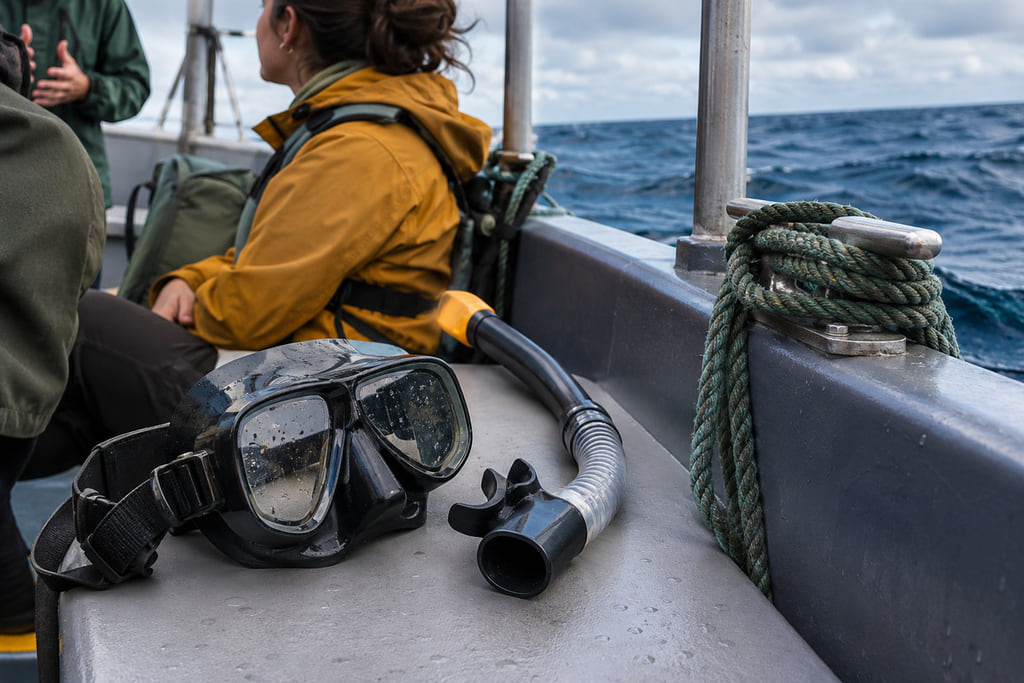
Rota dos Cetáceos’ own swimming programme page, checked on 14 November 2026, describes a standalone 2½-hour boat trip with equipment included. It says the crew decides when participants enter and describes a guide accompanying small groups. Its no-cetacean offer is a second trip, rather than a promise that you will enter the water.
Ask specifically about a child’s eligibility for the water activity: a general boat age label is not a detailed swimming assessment. Also ask about swimming confidence, boarding and reboarding, equipment fit and any individual restrictions. Describe your needs plainly. An operator’s general statement about assistance doesn’t establish that the activity suits every passenger.
The questions that change the booking
Before committing, get answers to these five points. Save them with the exact ticket option and selected date so you can distinguish the programme description from the terms of your booking.
- Is regulated dolphin observation from the water explicitly included?
- What participation requirements apply to each person in your party?
- How many people share the boat, and how is any water time organised?
- What happens financially if the boat trip runs but water entry is declined?
- What are the cancellation deadline, meeting point and check-in instructions for this ticket?
A refund for a cancelled sailing, a repeat trip after no sightings and compensation for no water entry are different policies. Don’t assume one covers the others. If a promised repeat would fall after your flight home, it has little practical value to your holiday.
Seasons, sea conditions and a useful booking choice
Visit Madeira describes dolphin and whale watching as a year-round activity. That doesn’t identify a month when an in-water encounter is assured. Choose a date with room to adjust your plans and an outing you would still value from deck. Avoid making a single departure the only worthwhile part of your holiday.
Think about the whole outing: reaching the meeting point, checking in, waiting, travelling by boat and returning ashore. For someone unsure about the boat itself, an ambitious swimming plan adds another decision. Ask about seating, shelter, toilets and boarding before choosing. Take the operator’s packing instructions for the actual vessel; a small open boat and a larger catamaran offer different surroundings.
When arranging the journey to Funchal, use the meeting-point instructions on your confirmation rather than an old map screenshot. Check how early you must arrive and allow time to find the correct desk. Keep a towel and dry layer for the return, and decide where belongings will stay aboard. Before booking another timed activity afterwards, ask when the trip normally returns and allow some breathing space between the two.
If watching from the boat suits you better
For travellers who prefer to stay aboard, VMT’s GetYourGuide product 57215 is a separate alternative. At the 14 November 2026 check it described a three-hour catamaran outing from Funchal, with a possible swim below Cabo Girão when conditions allow. That coastal stop is not a dolphin-swimming programme. Compare boat formats in our Madeira dolphin and whale watching guide.
We may earn a commission if you book through our links. Our recommendations remain independent.
Check availability on GetYourGuide — VMT wildlife-watching catamaran
Choose that alternative for the boat-based wildlife outing, rather than as a substitute ticket for entering the water with dolphins. For other ways to spend time at sea, compare our Madeira boat tours. If your party cannot agree on the water activity, settle the format first and only then choose a departure.
Swimming with dolphins: your questions
Can I swim freely after dolphins?
No. The regulated observation format keeps participants supported at the boat. It does not authorise independent pursuit or touching.
Which species are covered by the in-water rule?
Common dolphins and Atlantic spotted dolphins. A sighting of another species doesn’t satisfy that provision.
Is water entry guaranteed?
No. Treat it as conditional on the animals encountered, suitable circumstances and the crew’s decision. Ask what your ticket provides if you remain aboard.
Sources and booking checks
Checked on 14 November 2026: Article 6 of Regional Legislative Decree 15/2013/M, the IFCN marine-observation legislation index, Visit Madeira’s wildlife guide, Rota dos Cetáceos’ programme page and VMT’s GetYourGuide listing. Departure prices and available places are shown for your selected date by the booking provider.